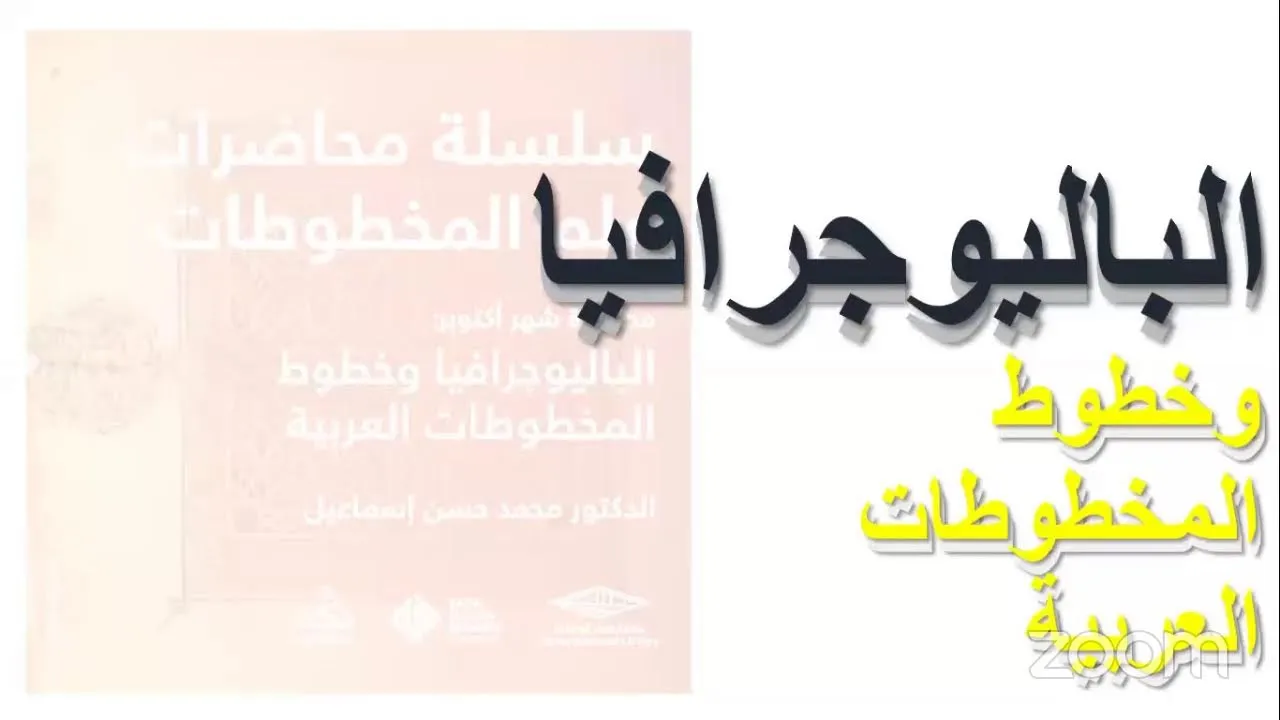
This lecture was delivered at the Juma Al Majid Center for Culture and Heritage in Dubai, hosted by Ms. Sheikha. What follows is a structured record of its main themes, allowing the lecture to be read as a text alongside watching it in full in the video above.
Opening Remarks
The session opened with words of welcome to the audience from the Juma Al Majid Center, followed by a review of the rich biography of Dr. Mohamed Hassan, holder of a master’s degree on “The Scribes of Egypt in the Fatimid Era” and a doctorate on “Chancery Writing in the Age of the Mamluk Sultans,” author of important works such as The Register of Arabic Calligraphy in Egypt, and recipient of the Egyptian and Arab certified chain of transmission (ijāza) in the Arabic scripts.
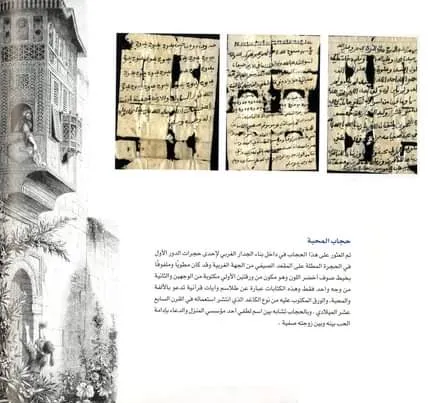
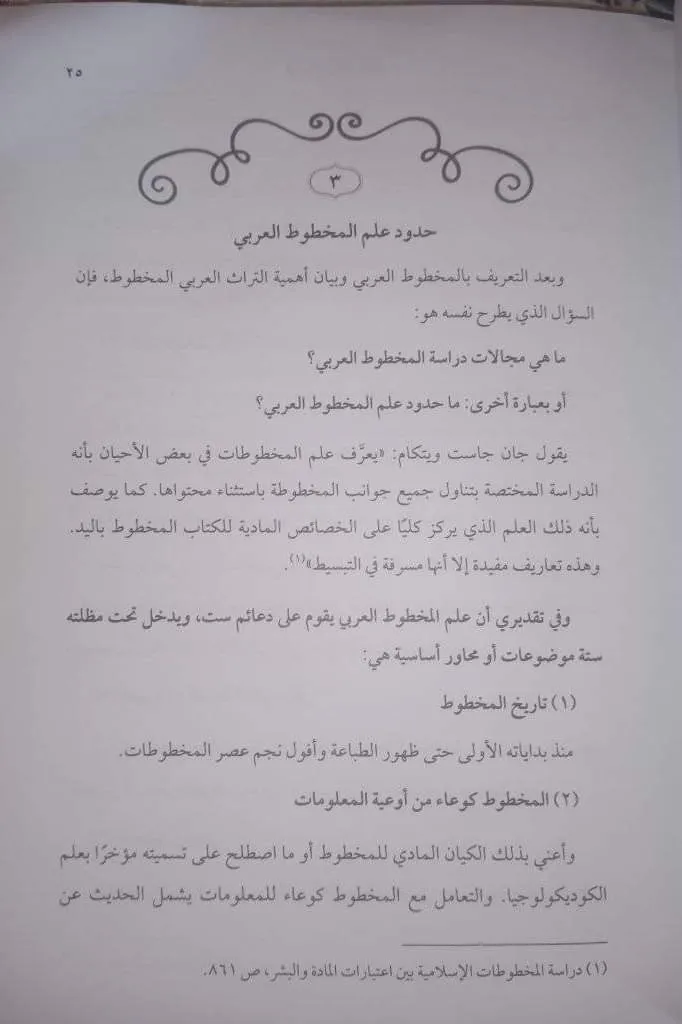
The lecture puts forward a deep vision of the importance of paleography (the science of scripts and the reading of ancient texts) as an individual obligation upon every researcher in Islamic history, archaeology, and the religious sciences, a means of understanding the very conscience of Arab-Islamic civilization.
Theme One: What Is Paleography (the Science of Scripts)?
The lecturer reviewed the divergence in defining the term across the various dictionaries:
- The Academy of the Arabic Language: its linguistic root is composed of two elements (ancient + writing), and it means the art of reading ancient writings.
- Dictionary of Arabic Terms (Magdy Wahba): rendered it as “khaṭṭāṭa,” a scholarly study of an ancient script in which the date of a manuscript is established by examining the style in which its letters were written.
- Dictionary of Calligraphy Terms (Afif Bahnassi): the science of the development and history of script.
The lecturer’s chosen definition:
Paleography is the science of Arabic scripts; it aims to establish the material history of a manuscript, determine its geographical framework, and trace the scholarly evolution that the scripts underwent.
Theme Two: The Levels of Study in Paleography
To form an accomplished researcher, Dr. Mohamed Hassan divided the study of this science into a hierarchical structure of four levels:
1. The Introductory Level (the Foundational Base)
- Recognizing the scripts: knowing the differences between the scripts (Naskh, Thuluth, Farsi, Ruqʿa, Diwani) and their development from the Hijazi to the Kufic with its various schools.
- Geographical and historical context: understanding the spread of Islam and its effect on writing (such as the Maghribi script, the scripts of Sudan and West Africa, al-Andalus, and Persia).
- Distinguishing manuscript from document: at this level the student does not distinguish between the script of a document and that of a manuscript, but focuses on the ability to read the script and determine its place and time (such as the signature and petition scripts of the Mamluk era).
2. The Intermediate Level (Building Knowledge and Terminology)
- Historical linguistics: connecting manuscripts to the lexical and historical works (such as Ṣubḥ al-Aʿshā and the dictionaries of Qur’anic and juristic terms).
- Understanding context: grasping the evolving connotations of historical words and terms (such as the terminology of the Crusades era, or that of the Fatimid period).
3. The Advanced Level (Analysis and Decipherment)
- Depth and interconnection: analyzing ancient texts and deciphering coded (secret/symbolic) writings.
- Scholarly synergy: invoking the model of Dr. Muhammad Muhammad Amin (the scholar of Mamluk endowments) and his collaboration with Dr. Laila Ali Ibrahim to produce the Dictionary of Architectural Terms in Mamluk Documents, which resulted from fusing documentary expertise with architectural and paleographic analysis.
4. The Specialist Level (Mastery and Professional Training)
- Fine specialization: the researcher becomes an expert in a precise field (such as the manuscripts of the Prophetic biography, the manuscripts of al-Maqrizi, or the scripts of the early Qur’anic codices).
- At this stage the researcher excels in his precise specialty and becomes an independent authority upon whom even his own teachers rely.
Theme Three: The Essential Differences Between Manuscript and Document
- Authorship and method: a manuscript is the product of individual effort and methodical composition, whereas a document has specific legal and official formulas.
- Multiplicity: a manuscript is copied in numerous copies as needed, whereas a document is an original, and any alteration exposes it to forgery.
- Identity: a manuscript bears the name of its author, whereas a document expresses a neutral legal/administrative context that lacks individual bias.
- Archiving: documents naturally accumulate to form archival units, whereas manuscripts are gathered artificially and catalogued in libraries and museums.
Theme Four: The Practical Application of Paleography (the Noble Qur’anic Codices as a Model)
The lecturer affirmed that the study of the noble Qur’anic codices is the foremost field for the science of scripts, tracing the developments that befell the writing of the Qur’an:
- The early Hijazi stage: writing stripped of dots and vocalization (such as the Sana’a codices).
- The vocalization stage (Abu al-Aswad al-Du’ali): the use of red dots as case markers (fatḥa, ḍamma, kasra) to fix the reading and protect the Qur’anic text.
- The pointing stage (Nasr ibn ʿAsim and Yahya ibn Yaʿmur): placing dots to distinguish similar letters (bāʾ, tāʾ, thāʾ, etc.).
- The stage of al-Khalil ibn Ahmad al-Farahidi: developing the vowel marks so as to take miniature geometric forms of the letters, the basis of contemporary vocalization.
The six ʿUthmanic codices (attributed to our master ʿUthman ibn ʿAffan):
The lecturer reviewed the six great codices distributed across: Cairo (two copies), Istanbul (two copies), Tashkent (Uzbekistan), and Saint Petersburg (Russia). He stressed the need to study them paleographically by comparing the type of script, the page format (vertical/horizontal), the medium (parchment), and by counting the lines and words, in order to establish the divergences among them and understand their true historical context.
Theme Five: The State of Contemporary Research and Future Visions
- The importance of scholars’ hands: the lecturer called for attention to studying the scripts of authors and scholars, praising the project of Dr. Tamer al-Gibali to catalogue original manuscripts in their authors’ own hands.
- A call to establish a digital platform: he appealed to cultural institutions (such as the Juma Al Majid Center) to adopt a project for a “digital database of original manuscripts” that would be imaged and catalogued and allow interactive analysis, on the model of the great Western Orientalist projects (such as the Corpus Coranicum project).
- Unifying scholarly efforts: he stressed the need to break down the barriers between the departments of history, archaeology, the arts, and documents, in order to arrive at a “unity of knowledge” that serves the Islamic heritage.
Theme Six: Highlights from the Question-and-Answer Session
- The most recommended publications: the books of Dr. Ghanim Qaddouri al-Hamad (such as The Early Qur’anic Inscriptions and The Orthography of the Noble Qur’an), and the Dictionary of ʿUthmanic Orthography by Dr. Bashir al-Humairi.
- Artificial intelligence in paleography: the current experiment is able to achieve an accuracy of about 60% in recognizing and analyzing ancient scripts, and is expected to reach 95% in the coming years, but it requires a “human foundation” and high-resolution processing of images.
- When is a text considered a manuscript? The doctor clarified that he treats anything written by hand as a manuscript even if it was written only a few years ago (as long as its author has died), because it requires a paleographic methodology to understand its context and symbols, going beyond the classical condition of the passage of a hundred years.
- The relationship of paleography to codicology: paleography (the science of scripts) complements codicology (the science of the manuscript’s material making, such as ink, paper, and binding), and the two work in synergy to understand the manuscript in full.
- The aesthetic function of script: script is not merely a vessel conveying information; it was historically used for visual design, for facilitating the reception of knowledge (such as tree-diagrams), and for spiritual purposes (such as Sufi manuscripts and Qur’anic codices).
Conclusion of the Session
The lecture concluded with wide acclaim from the audience and specialists for the abundance of its scholarly material, and with the Juma Al Majid Center’s thanks to Dr. Mohamed Hassan for this profound presentation, affirming the importance of continuing the efforts of investigation and excavation in the Arab and Islamic heritage with a modern and innovative scholarly spirit.